
Why Are You So Sore After a Workout? The Truth and How to Recover Faster — A Virginia Strength Coach's Guide
Published : May, 2026.
Authors: Matt Marshall (Co-Owner/ Strength Coach MSc, RSCC, CSCS, CPR/AEDD)
Collin Harrel (Co-Owner/ Strength Coach BSc, CSCS, CPR/AED)
You crushed leg day on Monday. Tuesday morning, you feel fine. Wednesday, you go to walk up the stairs and have to grab the railing just to make it to the top.
Yeap ! Sounds familiar, and you're not alone. Muscle soreness after a workout is one of the most universal experiences in training and also one of the most misunderstood.
Here's something most people get wrong: muscle soreness is not caused by lactic acid. That myth has been floating around gyms, locker rooms, and even older textbooks for decades. The science says otherwise, and what's actually happening in your body is far more interesting and a lot more useful to know if you want to train smarter and recover faster.
We're Matt and Collin, the coaches behind 804 Strength. Between us, we've spent years coaching lifters through every stage of soreness, from first-timers shocked at how wrecked they feel after one session, to experienced athletes managing volume across long training cycles. In this guide, we'll walk you through what's really happening, what works, what doesn't, and how to stop letting soreness derail your progress.
But before any of that makes sense, we have to clear up the biggest myth in the gym.
Is Lactic Acid Really What Makes You Sore?
For most of the last century, the story went like this: you train hard, lactic acid builds up in your muscles, and that buildup makes you sore the next day. Clean. Simple. Wrong.
Lactate (the correct term) isn't a waste product. It's actually a fuel source your body uses during exercise. A foundational paper by Robergs, Ghiasvand, and Parker, published in the American Journal of Physiology in 2004, dismantled the lactic acid theory entirely.
Lactate clears from the bloodstream within 30 to 60 minutes of exercise, meaning if you're sore 48 hours after squats, lactate is long gone and physically cannot be the cause.
So if it's not lactic acid, what is it?
What's Actually Causing Your
Post Workout Soreness
The soreness you feel a day or two after training has a name: Delayed Onset Muscle Soreness, or DOMS.
DOMS shows up 12 to 24 hours after a workout, peaks somewhere between 24 and 72 hours, and fades over the next few days. When you train, especially when you lower a weight under control, run downhill, or do anything that lengthens a muscle while it's working, you create microscopic stress in the muscle fibers. This isn't damage in the "you broke something" sense. It's the normal stress that signals your body to rebuild stronger.
In response, your immune system kicks in. Inflammatory cells move to the area, fluid shifts, and the nerves in that region get more sensitive. That repair process, not the workout itself, is what you feel as soreness. A peer-reviewed paper by Connolly, Sayers, and McHugh, published in the Journal of Strength and Conditioning Research in 2003, describes DOMS as a normal byproduct of exercise-induced muscle damage and the inflammatory response that follows.
In plain English: your muscles got stressed in a new way, your body is patching them up, and that patch-up process is what hurts.
A few things make DOMS worse:
A new exercise, program, or rep range your body hasn't adapted to yet
Lots of eccentric (lowering) work, like slow squat descents, heavy negatives, or downhill running
A big jump in volume or intensity from what you're used to
Coming back after time off
Here's the part most people don't hear: DOMS gets dramatically less severe as you train consistently. This is called the repeated bout effect.
Your body adapts to repeated exposure, and the soreness response shrinks fast. The lifters we coach who are constantly wrecked aren't the most dedicated ones. They're usually the ones training the most randomly. The lifters making real progress, hitting PRs and showing up consistently, are almost never sore for days at a time.
Which brings up a question we get from new clients all the time: if I'm not sore, did the workout even count?
Is Soreness a Sign of a Good Workout?
Short answer: no.
Soreness tells you a workout was new or unfamiliar to your body. Not that it was effective. We deal with this misconception constantly.
People walk in believing that if they're not sore, the workout was a waste. They go harder than they need to, chase the burn, and treat brutal soreness as a badge of honor. Then they wonder why they're exhausted and not progressing six months in.
What actually drives progress is far less dramatic: progressive overload, consistency, and recovery. Showing up week after week with intelligent programming will outperform a hero workout once a month, every time. None of that requires you to be sore.
At 804 Strength we don't want our clients chasing soreness. We want them building consistency.
The reverse is also worth saying clearly: constant, severe soreness usually means something is off. Maybe the volume is too high. Maybe the program is too random, with different exercises every session, no progression, and no plan. Whatever the cause, being crushed for days after every workout isn't grit. It's a problem worth solving.
So if soreness isn't the goal, what should you actually do when you're sore?
How to Recover Faster: What Actually Works
Let's be honest with you. There's no magic recovery hack. Nothing makes DOMS disappear in an hour. What you can do is support the recovery process so it goes smoother and doesn't drag on longer than it needs to.
These are the methods we actually use with our athletes:
1. Move (Active Recovery). When you're sore, the instinct is to lie down. Don't. Light movement, like a walk, easy cycling, or a mobility flow, increases blood flow to the affected muscles and supports repair. We tell our sore clients all the time: don't take the day off, take a different kind of day. A 20-minute walk will do more than the couch.
2. Sleep. If we could only recommend one recovery tool, it would be sleep. Most muscle repair happens overnight. Cut sleep short and recovery suffers, performance drops, and soreness lingers. If you're chronically sore and sleeping five hours a night, no foam roller is going to fix that.
3. Protein and Calories. Your muscles can't rebuild without raw materials. Most active people do well in the range of 0.7 to 1 gram of protein per pound of bodyweight per day. Equally important: don't under-eat. Recovery is energy-expensive, and chronic under-fueling drags it out.
4. Hydration. Water doesn't "flush out" anything magical, but proper hydration supports circulation and the basic biochemistry of recovery. The simple rule: drink enough that your urine is light yellow, more around training, and don't overthink it.
5. Time. This is the one nobody wants to hear. DOMS resolves within 3 to 5 days. The methods above support the process, but they don't bypass it. The real long-term answer is the repeated bout effect, which only happens with consistent training.
Tired of being wrecked for days after every workout?
If you're sore for 3 or 4 days every time you train, the problem usually isn't your willpower or your foam rolling. It's your programming.
At 804 Strength in Mechanicsville, our small group coaching is built around progressive, intelligently programmed training that gets you stronger without leaving you crushed every week.
No pressure, no commitment. Just a conversation about your fitness goals.
What Doesn't Work (or Barely Works)
For every recovery method backed by real evidence, there are five being sold to you on Instagram and at the front desk of every commercial gym. Most don't deliver what people think.
Static stretching has little to no measurable effect on DOMS. A Cochrane systematic review (Herbert & de Noronha, 2007) confirmed it. Stretching can feel good and help with mobility. Just don't rely on it as your recovery strategy.
Foam rolling offers modest short-term relief. The research is real, but the effect is small. We're not telling you to throw out your foam roller. We're telling you not to expect it to fix a programming problem.
Cold plunges are more complicated than the hype suggests. Cold water immersion can reduce short-term soreness, but research published in the Journal of Physiology (Roberts et al., 2015) showed that regular cold immersion after strength training blunts long-term muscle adaptations. The same tool that makes you feel better tomorrow may slightly reduce the strength gains you're working for. Use it occasionally if you enjoy it. Don't make it routine after lifting.
"Detox" drinks and lactic acid flushes are nonsense. Lactate isn't the problem, so flushing it isn't the solution. Anything sold with that language is leaning on a myth the science already moved past.
The pattern in all of this should be clear: nothing replaces sleep, nutrition, smart movement, and consistent training.
Should You Train When You're Sore?
Usually, yes. But it depends on how sore you actually are.
Mild to moderate soreness: train. You're often better off doing a lighter version of your planned session, training a different muscle group, or doing active recovery. Movement helps.
Severe soreness, the kind where you can't sit down without using your arms or walk normally, is a different story. Active recovery only. Eat well, sleep, and let the body catch up.
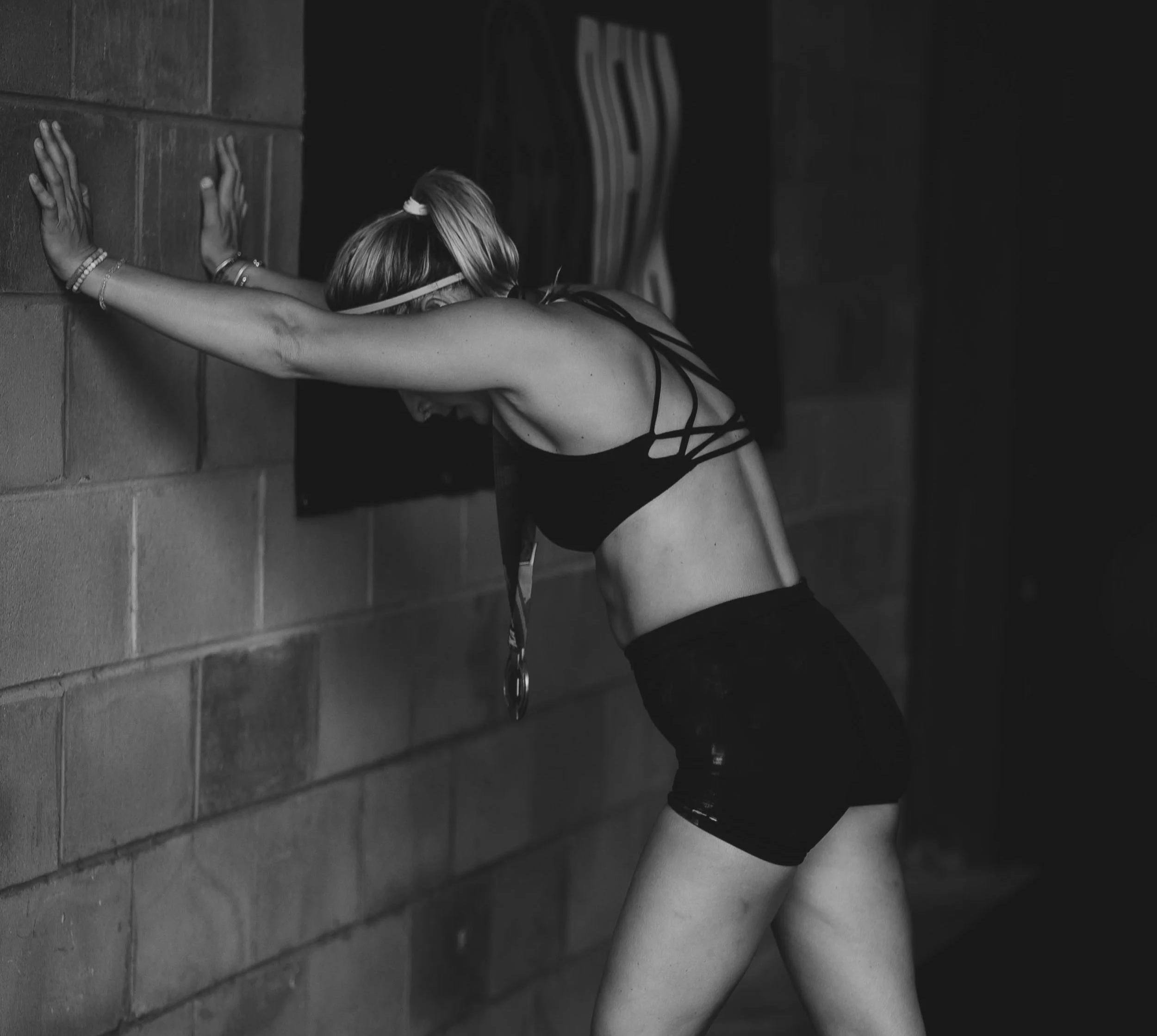
This is exactly the kind of decision a coach makes for you on the fly. When someone walks into our gym moving stiff and tired, we don't run them through the same session we'd planned for someone who slept nine hours and feels fresh. The plan adjusts to the person.
One important note on red flags. Most soreness is normal, but a few things warrant a doctor's visit, not a workout: sharp localized pain rather than dull achiness, significant swelling, soreness that worsens after day three or doesn't improve after a week, and especially dark, tea-colored urine combined with severe pain and weakness, which can be signs of rhabdomyolysis. Rare, but worth knowing.
How Smart Programming Prevents Most of This
Here's the bigger picture most people miss.
If you're sore for three or four days after every workout, the problem usually isn't your foam rolling or your protein intake. It's the way your training is structured, or more often, the fact that it isn't structured at all.
Random workouts produce random results. They also produce constant soreness, because your body never gets the chance to adapt to a consistent stimulus before you throw a new one at it. Different exercises every session, no progression, intensity that swings wildly with no logic. That's a recipe for being wrecked all the time and making slow progress despite the effort you're putting in.
What we coach instead is straightforward, but it's the difference between guessing and progressing:
Progressive overload. Sessions that build on each other, adding weight, reps, or quality over time in a way your body can recover from.
Intentional variation, not chaos. Changes are planned, not pulled from someone's Instagram feed.
Recovery built into the plan. Volume rises and falls in cycles. Easier weeks get scheduled in.
A coach watching the reps. Bad mechanics on heavy work create unnecessary muscle damage and disproportionate soreness. Good coaching catches that before it costs you a week.
Consistency through community. The biggest predictor of long-term progress isn't programming or genetics. It's showing up. And the strongest predictor of consistency is training with people who notice when you don't.
This is exactly what we built our small group training around. Programming is intentional. We're watching every rep, scaling appropriately, adjusting in real time based on how you're moving that day. The groups are small enough that we know your goals, your limits, and your training history.
The lifters who come to us from across Mechanicsville, Hanover County, Glen Allen, Ashland, and the East End of Richmond are usually tired of grinding through random workouts that leave them wrecked and not making progress. What they find is something different: smart training, real coaching, and a group of people who actually want to see them succeed.
The Bottom Line
Soreness isn't the goal. It's not a measure of how hard you worked. It's not proof your training is paying off. And it's definitely not caused by lactic acid.
What it is, is a normal response to stress your body wasn't fully prepared for. Used well, it teaches you about your training. Used poorly, it becomes the thing that wrecks your week, kills your consistency, and convinces you that fitness has to feel like punishment.
It doesn't.
The lifters making real, lasting progress aren't grinding themselves into the ground. They're training intelligently, recovering on purpose, and trusting that consistency beats intensity every time. That's what we coach at 804 Strength.
If you're in Mechanicsville, Hanover County, or Greater Richmond and you're tired of training without a plan, or you're ready to get serious about your strength for the long haul, we'd love to meet you.
Train smarter. Get stronger. Stay consistent.
Book a free Trial and let's talk about your goals.
Coaching real people through real strength training across Mechanicsville, Hanover County, Glen Allen, Ashland, and the East End of Richmond.
FAQ: About Muscle Soreness After Workout.
-
Most DOMS lasts 24 to 72 hours, with peak soreness around 48 hours, and resolves within 3 to 5 days. If you're still significantly sore after a full week, the workout was likely too far outside what your body was prepared for.
-
Soreness peaking at 48 to 72 hours is completely normal. That's the natural DOMS timeline. As long as it's improving day by day, you're fine. If it's getting worse after day three, or you're seeing sharp pain or swelling, get it checked.
-
Mild to moderate soreness, yes. Light or moderate training often helps. Severe soreness, no. Active recovery and rest are smarter calls.
-
Sleep, light movement, adequate protein, and hydration. Foam rolling and massage offer modest short-term relief. The real long-term answer is consistent, intelligent programming that prevents the worst of it from happening in the first place.
-
No. Soreness signals that a workout was new or unfamiliar, not effective. The most consistent, progressing lifters are usually the least sore.
-
They can reduce short-term soreness, but research (Roberts et al., 2015) shows that regular cold immersion after strength training blunts long-term adaptations. Use occasionally if you enjoy it. Don't make it routine after lifting.
References
1. Robergs, R. A., Ghiasvand, F., & Parker, D. (2004). Biochemistry of exercise-induced metabolic acidosis. American Journal of Physiology — Regulatory, Integrative and Comparative Physiology, 287(3), R502–R516. https://pubmed.ncbi.nlm.nih.gov/15308499/
2. Connolly, D. A. J., Sayers, S. P., & McHugh, M. P. (2003). Treatment and prevention of delayed onset muscle soreness. Journal of Strength and Conditioning Research, 17(1), 197–208. https://pubmed.ncbi.nlm.nih.gov/12580677/
3. Herbert, R. D., & de Noronha, M. (2007). Stretching to prevent or reduce muscle soreness after exercise. Cochrane Database of Systematic Reviews, (4), CD004577. https://pubmed.ncbi.nlm.nih.gov/17943822/
4. Roberts, L. A., Raastad, T., Markworth, J. F., et al. (2015). Post-exercise cold water immersion attenuates acute anabolic signalling and long-term adaptations in muscle to strength training. The Journal of Physiology, 593(18), 4285–4301. https://pubmed.ncbi.nlm.nih.gov/26174323/
