Functional Longevity Training in Richmond & Mechanicsville: How to Build Strength That Lasts
Published : February 2026.
Autors: Matt Marshall (Co-Owner/ Strength Coach MSc, RSCC, CSCS, CPR/AEDD)
Collin Harrel (Co-Owner/ Strength Coach BSc, CSCS, CPR/AED)
If you’re searching for a strength and conditioning gym near you in Mechanicsville or the Richmond area, chances are you’re not just looking to work out, you’re looking to stay capable. To move well, feel strong, and keep up with work, family, and life without constantly feeling sore, stiff, or depleted. This is where functional longevity training matters.
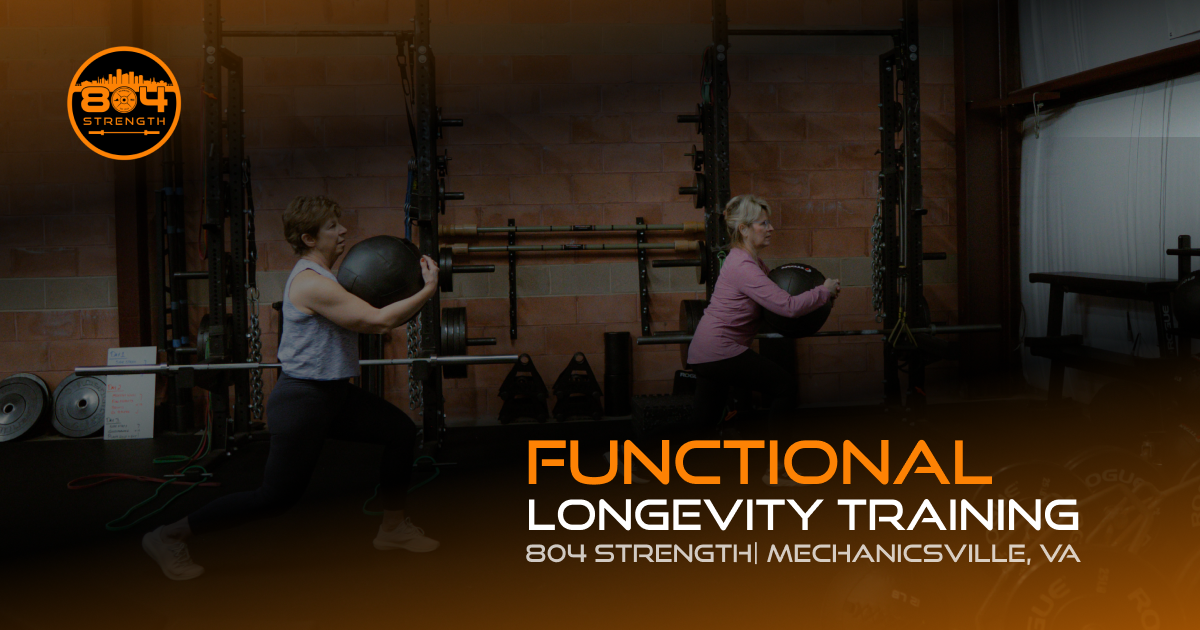
The body doesn’t always show capacity the way social media makes it look. Most of what you see online is a one‑minute highlight, not the full story of how often someone trains, how they recover, or whether they can actually keep doing that year after year. Longevity is built in the way you train today. Long-term strength is the product of consistent, intentional training, especially when that training is guided by structured coaching rather than random workouts.
Strength, mobility, and resilience are the result of repeated exposure to load, movement, and recovery over time. When training lacks structure or intent, the body still adapts, just not always in a way that supports longevity, which is something we often see in people searching for a strength and conditioning nearby gym, however, without having clear guidance on what they actually need.
How Does Your Body Adapt to
the Way You Train Over Time
Over time, your training habits shape your movement, your resilience, and your tolerance for stress, whether you realize it or not.
After years of coaching adults in Mechanicsville, Hanover County, and the greater Richmond VA area through small group strength and conditioning at 804 Strength, we’ve noticed something that keeps repeating, no matter someone’s age or fitness level.
Most people train for what feels useful right now, not for what their body will need to keep doing year after year.
We see people who are consistent, motivated, and doing all the “right” things on paper, yet their body tells a different story. They feel stiff more often than they feel strong. Recovery takes longer than it used to. Small issues show up and never fully go away. Training becomes something they squeeze into life instead of something that supports it, often because their program doesn’t account for real-life demands outside the gym.
What’s striking is that this isn’t limited to older adults. We see the same patterns in younger members who train hard but lack structure, and in busy professionals whose workouts don’t account for long hours sitting, stress, or unpredictable schedules. Different lifestyles, same outcome.
This is where functional longevity comes in. Building strength, movement, and resilience in a way that holds up under real life. Work demands. Family responsibilities. Seasonal changes. Stress. Recovery, all things that structured small group training is designed to support when coached properly.
Today, we’re breaking down what functional longevity actually means, why it matters for how people live and work in the area, and how training can be structured so your body keeps up with your life instead of slowly falling behind it, especially for those in the Mechanicsville and Richmond area, who are looking for a long-term training solution.
Why Am I Still Sore or Stiff
Even If I Train Consistently?
One of the most common questions we hear from people who train regularly, including those new to small group training at 804 Strength, is why their body doesn’t always feel as capable as they expect.
They’re consistent. They feel better than they did years ago. Yet energy fluctuates, stiffness becomes familiar, and strength doesn’t always carry over into daily life. This isn’t a lack of discipline. It’s a misunderstanding of how the body adapts.
Muscle, connective tissue, and the nervous system respond to repeated demand, not effort alone. The body adapts to load, movement patterns, and recovery over time. When training lacks structure or progression, the body still adapts, just not in a way that supports long-term function, which is why coached progression is a core focus of our strength and conditioning programs.
Important note: Not all progress is
immediately or physically visible
A common frustration among long-term gym members, especially those transitioning from big-box gyms to a more coached environment, is feeling strong and capable but not looking the way fitness culture says they should. This disconnect can quietly erode confidence and, over time, consistency.
Strength that improves joint stability, posture, coordination, and resilience rarely shows up as dramatic muscle definition. Yet these adaptations are what protect the body from breakdown, improve recovery, and support real-life demands, which is exactly what functional strength training is meant to do.
The body doesn’t reward training with aesthetics by default. It rewards it with efficiency, tolerance to stress, and reliability. When progress is measured only by appearance, meaningful improvements are often overlooked.
How Proper Strength and Conditioning
Training Improves Daily Energy
Another common belief is that training will drain the energy needed for work and responsibilities. In reality, poorly structured training does that.
When intensity is unmanaged and recovery is ignored, the nervous system stays under constant stress. Over time, this reduces focus, motivation, and resilience. Training that respects progression and recovery improves how efficiently the body produces and uses energy, which is why our small group training sessions are programmed with clear intent rather than constant exhaustion. (Pierre Debraux, PhD)
Well-designed training increases work capacity, sharpens mental focus, and builds a body that recovers faster between demands. Instead of competing with life, it supports it.
How to train so your body supports your life, not just your workouts
If you’re consistent in the gym but unsure whether your training is actually building long-term capacity, start here, especially if you’re currently searching for a strength and conditioning gym near you that prioritizes longevity.
At 804 Strength, our small group strength and conditioning programs in Mechanicsville are built around these principles. This checklist reflects how we coach real people with real jobs, real stress, and real recovery needs.
The Functional Longevity Checklist
1. The Adaptation Reality Check
Ask yourself once a week:
Does my training help me feel more capable outside the gym?
Am I recovering better than I did six months ago?
Do I feel strong in everyday positions, not just during workouts?
2. The Energy Rule
Training should increase daily energy within four to six weeks.
If training consistently leaves you mentally foggy, irritable, sore in the same places every week… then your training is likely exceeding your recovery capacity.
Functional longevity prioritizes sustainable output over exhaustion, which is a key principle behind our programming at 804 Strength.
3. The Movement Minimum
Every training week should include:
Loaded lower-body movement,
Upper-body pushing and pulling
Core stability under control, not fatigue
Intentional range of motion, not rushed reps
4. The Lifestyle Match Test
Your training should reflect how you live.
If you sit most of the day:
prioritize hip mobility
posterior chain strength
controlled rotation
If your job is physically demanding:
manage volume carefully
prioritize recovery
train efficiency, not excess fatigue
Training that ignores lifestyle eventually breaks down, which is why our coaches account for work demands common in the Richmond and Mechanicsville community.
5. The Long-Term Signal
Progress for longevity looks like:
fewer recurring aches
faster recovery between sessions
more confidence in movement
consistent performance, not spikes
If those signals are missing, try training with more structure, such as a coached small group strength and conditioning program.
Why more noise doesn’t always mean better results
There’s a long-standing belief in the fitness industry that intensity comes from volume. Louder music. Louder coaches. More external pressure. To be fair, that approach can work in the short term. Heightened arousal increases output temporarily.
The problem is that training isn’t a single moment. It’s a repeated process.
When the nervous system is constantly pushed into a heightened stress state, recovery suffers. Motor control declines. People move faster, not better. Over time, this leads to inefficient patterns, chronic fatigue, and a growing disconnect between effort and results.
Research on motor learning and strength adaptation consistently shows that long-term progress depends on quality of movement, appropriate loading, and the ability to regulate intensity. (Morrison S, Newell KM).
Coaching that prioritizes awareness, control, and progression builds athletes who last, which is why our approach at 804 Strength focuses on clarity over chaos.
Many people come to 804 after realizing that being yelled at didn’t actually make them stronger. It just made them tired. What they respond to instead is clarity. Knowing why they’re doing something. Feeling coached rather than pushed.
When gyms optimize for space instead of people:
The hidden cost of selling access instead of outcomes
Make it stand ou
Whatever it is, the way you tell your story online can make all the difference.
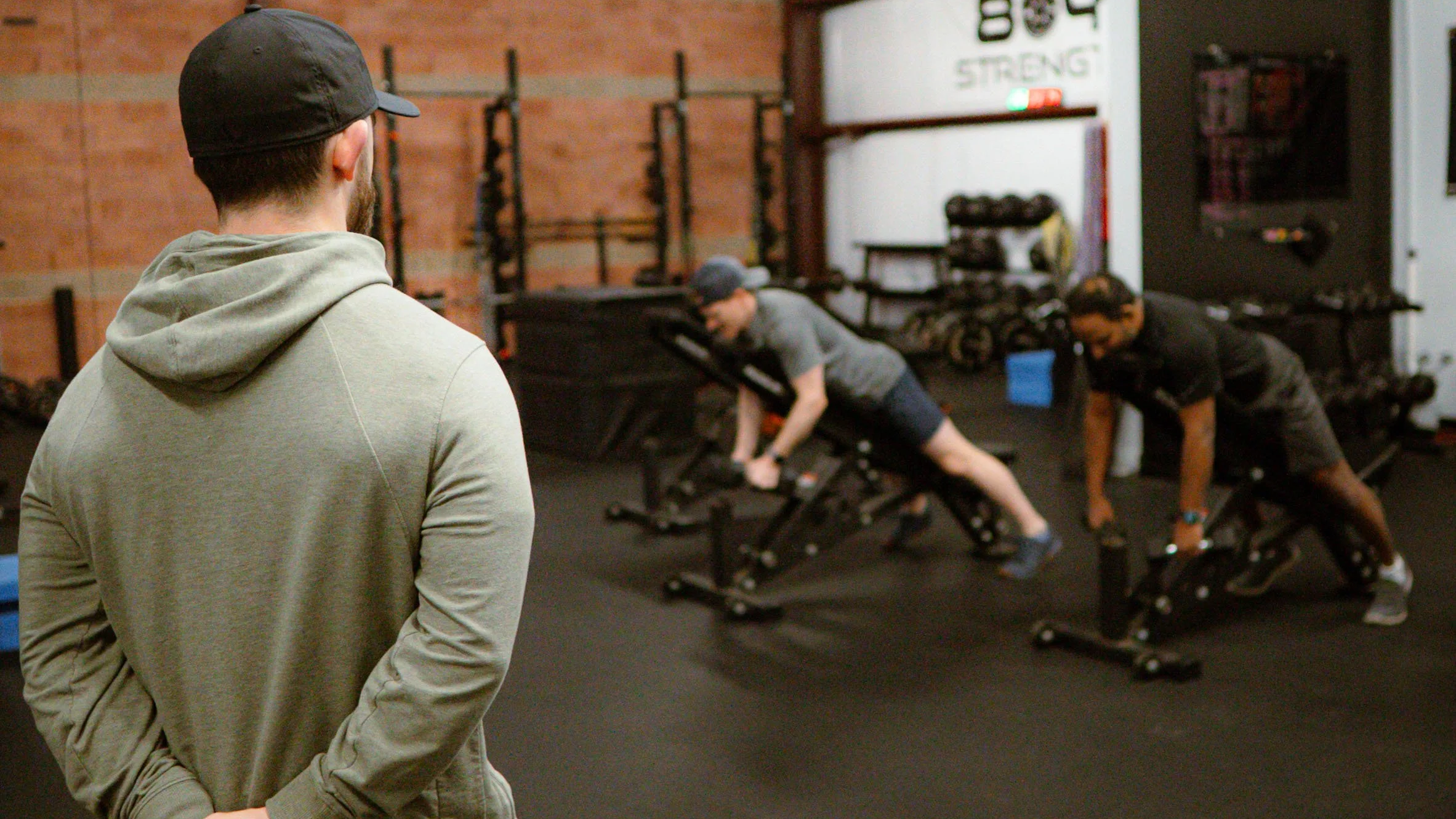
Most gyms are built to scale space instead of the actual fitness experience. More members. More square footage. More bodies per class. From a business standpoint, that model makes sense. From a training standpoint, it often falls short.
When gyms focus on filling rooms, individual progression becomes secondary. Coaching attention is diluted. Programming becomes generalized. The client is sold access, not guidance.
From a behavioral psychology perspective, adherence improves when people feel supported, understood, and confident in the process, which is why small group training environments consistently outperform large, overcrowded gym models. (Pietila R, Olson D.)
Functional Longevity is training in a way that respects
how the body learns, adapts, and recovers
At 804 Strength, a strength and conditioning gym serving Mechanicsville and the greater Richmond area, the most meaningful outcome isn’t how hard someone trains on a given day. It’s seeing people move with more confidence, recover faster, stay consistent year after year, and feel good about the investment they’ve made in themselves.
This approach is especially valuable for adults 30+, busy professionals, parents, and anyone who wants to keep training without constantly restarting due to pain, burnout, or inconsistency.
If you’re in Mechanicsville or the Richmond area and want strength training that supports your life long-term, start with a free small group training session. Meet our coaches, experience our approach, and see what structured strength and conditioning feels like when it’s built for longevity.
FAQ’S
What is functional longevity training?
A: Functional longevity training focuses on building strength, mobility, and resilience in a way that supports your life long term, not just your workouts. Instead of chasing short-term intensity or aesthetics, it prioritizes movement quality, progressive loading, and recovery so your body continues to adapt positively over years, not just weeks. The goal is to stay capable, confident, and pain-free as work demands, family responsibilities, and stress change over time.
Is strength training safe as I get older?
A: Yes. In fact, properly coached strength training becomes more important as you age. Research consistently shows that progressive resistance training improves joint health, bone density, balance, and overall function in adults well into later decades of life. The key is structure and coaching. Training that respects recovery, progression, and individual limitations helps reduce injury risk and supports long-term independence rather than breaking the body down.
How is small group strength training different from big gyms?
A: In most big gyms, members are sold access to equipment, not guidance. Programming is generalized, coaching attention is limited, and progression is often left to chance. Small group strength training offers structured programming, real coaching, and intentional progression while still benefiting from group energy. At 804 Strength, this means each session is designed to help members move better, recover faster, and build strength that transfers to real life, not just the gym floor.
How often should I train for long-term results?
A: For most adults, strength training two to four times per week with proper structure produces the best long-term results. Consistency matters more than frequency, and recovery is just as important as effort. Well-designed programs allow the body to adapt without accumulating excessive fatigue, leading to better energy, fewer recurring aches, and steady progress over time. More is not always better; smarter is.